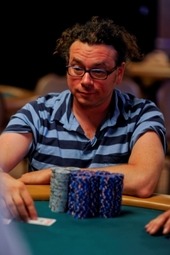
Prof Charlie Nesson 13june12

Prof. Charlie Nesson

Harvard University employs 973 librarians and tonight, a good number of them will be playing poker in the Harvard Law School cafeteria with Charlie Nesson.

Charlie Nesson, the William F. Weld Professor of Law at Harvard, is somewhat of an eminence grise at the university at large: the youngest to be hired as a full professor; a defender of Daniel Ellsberg (look up the Pentagon Papers) and others before the U.S. Supreme Court; a famous lecturer on Evidence, and a staunch advocate for the game of poker for teaching life skills.

He holds a poker reading group with his 1-L students, after which there is informal play, and his almost missionary zeal has now spread to the Harvard librarians, who are learning the game with hopes that they might teach captive students and transform their arguably moribund institutions from warehouses of dusty tomes to community centers for intellectual engagement and play.

Indeed, play is the operative word here, as Nesson believes that, aside from the concrete cognitive and intuitive skills involved in sophisticated poker play, the game teaches a sense of self-mastery and dominion, of being a player at the table and in the world at large.

As an adjunct to poker, Nesson aims, through his recently founded Mind Sports Research Network at the Berkman Center at Harvard, to study the essential nature of strategic thinking through the study of all the mind sport games–Bridge, Go, Chess, and Draughts. This is the heart of the symposium, detailed on the IFP News page, that precedes the poker night on 13th June.

Masters of the various games will talk about what makes their sports unique — strategically, culturally, and as metaphor — followed by break-out sessions to deconstruct the elements of the game and begin to define a framework for curriculum study (on-line and in schools). Following a panel conversation, moderated by the Berkman Center’s John Palfrey, discussion will move on to poker instruction in the Langdell Library, before decks of cards are dealt for an informal game.

On hand for the International Federation of Poker will be Anthony Holden, the President of the IFP, as well as Sir Harry Evans; poker author and Professor Jim McManus; and Grandmasters in Go, Chess, Draughts, and Bridge.

It promises to be a lively and ground-breaking event, with news of its outcome on the IFP website in the coming days.
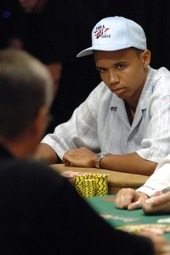
Phil Ivey 15june12

Phil Ivey

It has been something of a difficult 18 months for Phil Ivey. Known as one of the best players in the game over the past decade, his reputation away from the table rather than at it has caused him to take leave of the spotlight; his involvement with Full Tilt Poker tarnishing his standing following the events of Black Friday in April 2011 and what followed.

It was in light of the Full Tilt fiasco that Ivey sat out the 2011 World Series of Poker, choosing not to flaunt his ability to play, while others with money stuck in frozen bank accounts, were unable to.

But Ivey has returned after this brief hiatus, immediately demonstrating to the poker world that he has lost none of the desire that took him to the top of the game in the first place. Jumping back in at the WSOP, Ivey reached three final tables in the space of a week, the most recent this week in the $5,000 Omaha Hi/Lo contest, where he narrowly missed out on his ninth bracelet, finishing in third.

Ivey lies fifth in the All Time bracelet winners list (one behind the first ever winner Johnny Moss), but like Phil Hellmuth who leads the standings, it’s not about the money or material profit for him, just the bracelet and the opportunity to try and win another.

Few players inspire spectators as much as Ivey, who boasts a unique talent (or would if he did interviews), which is at times masked by a look of indifference as he plays. Like masters of any sport, Ivey makes it look easy, frustrating those seeking to imitate.

Examples of his talent are plentiful though few are as awe inspiring as when he played against British player Paul Jackson in Monte Carlo, a bluff versus re-bluff dance that showed Ivey to be a master of his art, as this clip shows:

http://www.youtube.com/watch?feature=player_embedded&v=60tWTcHKW_Q

Ivey is gifted player who brings with him an aura of anticipation at any event. With plenty of play left at the World Series, Ivey may yet win that ninth bracelet.

Harvard Law School 18june12

Harvard

As we reported last week on the IFP website, Harvard Law School was the venue for a day-long conference about the benefits mind sports could have on school curriculums for millions of children around the world.

With Masters of Chess, bridge, Go, draughts and poker all in attendance, the conference, entitled “Bringing Mind Sports into the Classroom and Beyond”, was hosted by Weld professor Charlie Nesson who outlined the central concepts of mind sports as an educational tool, and one that could prove to be of immense benefit to learning.

An article about the day published by Harvard Magazine detailed Professor Nesson’s vision for mind sports in education.

“Education must strike a balance between physical and mental sports,” said Nesson. “Teaching kids, we can use the notion of starting with play—which is where they are. Schools tend to turn them off at certain points: fractions and algebra are just death on math for so many kids. But in a game, they aren’t just abstract symbols, but tools.”

Also in attendance was Anthony Holden, author and President of the International Federation of Poker, who was unequivocal in his belief in the merits of poker in classrooms.

“Things that can go wrong in poker have parallels in things that can go wrong in life,” he declared. “You are caught out in a bluff in poker—maybe you are caught out in a lie in life. And in both cases, one big challenge is keeping your ego under control.”

The IFP will be among those keeping close eye on the outcomes of the conference, enhancing the role poker can play in mind sports development, particularly in the digital age.

“All five mind sports work online,” said Holden. “There is huge potential for expansion.”

You can read the entire article on the Harvard Magazine website.

Rafael Nadal Ps

Rafael Nadal

Olympic gold medalist and multiple Grand Slam tennis champion Rafael Nadal has joined the biggest online poker company PokerStars, as one of its ambassadors.

Announced on the PokerStars Blog today, Nadal, 26, is keen to learn the game of poker and will be mentored by various Team PokerStars Pros in the coming months, attempting to draw on many of the skills he uses to such great effect on the tennis court to improve his game one step at a time.

“It’s no secret that I love to compete and try my very best in everything, whether that’s tennis, golf or video games,” said Nadal. “When I discovered the game of poker, I chose to join PokerStars because they understand what it takes to be the best and associate themselves with the qualities of champions. I’m very happy to be working with them.”

Nadal will play poker in spare moments while concentrating on tennis, with the Wimbledon Tennis Championship only days away. According to the press release, Nadal will be devoting time over the summer, representing PokerStars in online tournaments, in advertising campaigns and at charity events.

“Rafa Nadal represents all that is great about competition – the mix of talent, intellect, dedication and mental strength that you find in champions in every sport,” said Mark Scheinberg, PokerStars Chairman of the Board. “We are proud to have Rafa as an ambassador for the brand and excited at the opportunity to help him enjoy and improve his game.”

Nadal joins a stable of elite athletes who have made poker their “other game”, and who play with PokerStars. They include other Olympic medallists such as Fatima Moreira de Melo, as well as former Tennis champion Boris Becker.

Ylon Schwartz 18june12

Ylon Schwartz

Flicking through results from the World Series of Poker this week, Ylon Schwartz’s win in the $1,500 H.O.R.S.E. event stands out.

H.O.R.S.E. combines forms of hold’em, Omaha, and Stud into one event requiring multiple talents. But when it comes to such ability Schwartz has the lot, and not just in poker. Schwartz is a true Mind Sport athlete, excelling in both poker and chess.

Schwartz broke through to the upper echelon of the game finishing fourth in the 2008 WSOP Main Event behind eventual winner Peter Eastgate. Having been a reluctant target of the media spotlight for several intense weeks, Schwartz escaped the attention after the November finale but not before his story, that of a talented Mind Sport competitor emerged.

Schwartz’s took to chess from a young age, playing in both organised competitions and in street games growing up in Manhattan. He excelled in both arenas; making a living from impromptu games in Washington Square Park and obtaining a FIDE rating of more than 2,300.

Then in 2000 Schwartz was introduced to poker by a friend and found within him a natural ability that ultimately led to bigger tournaments and the World Series.

As an article in the New York Times reported at the time, Schwartz put his success down to his chess background, although interestingly Schwartz, whose upbringing was marred by an absentee father and whose mother died in 2003 after a long illness, credited something else:
“Empathy is the most important thing in poker,” he said. “You have to really be aware of what your opponents think. The best thing about poker is that it exposes all your weaknesses.”

Reading the article, it’s easy to see how that might apply to Schwartz both on and off the table.

Now he has the prize he has chased for so long. In a poker career that started a decade ago Schwartz had reached four WSOP final tables and the penultimate table of six other events. Up to now a bracelet had eluded him, but no longer.

After that significant payday four years ago Schwartz fled the media glare. His win last week will not come with quite the same attention, which Schwartz will welcome gladly. Nevertheless, spotlight or not, Schwartz’s performances at the poker table and across the chess board are an inspiring sight.